


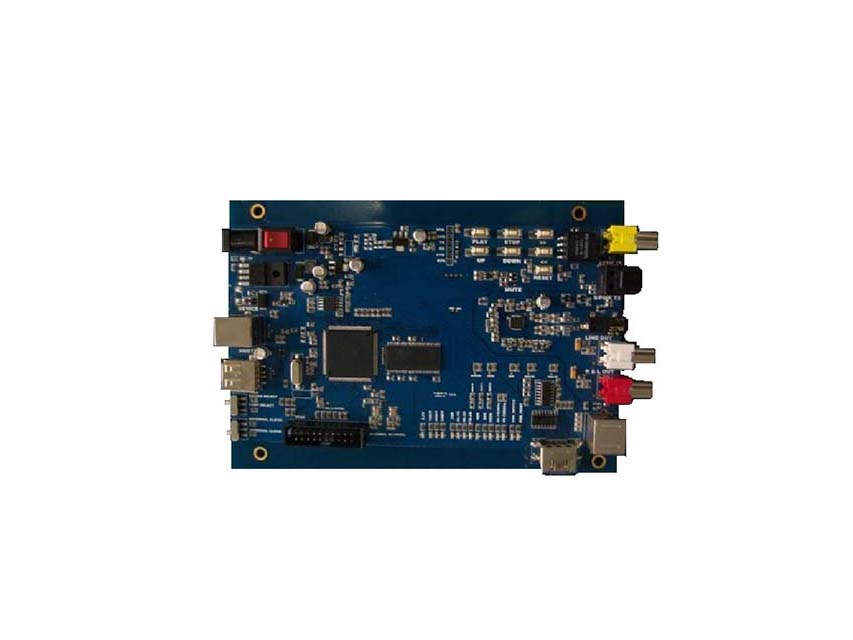
In modern electronics manufacturing, printed circuit board assembly plays a decisive role in determining product performance, reliability, and scalability. Among the various assembly methods, Surface Mount Technology (SMT) and Through-Hole Technology (THT) remain the two most fundamental processes. Understanding how these two methods differ—and when to use each—is essential for companies seeking reliable PCBA assembly service, especially for custom PCBA assembly and industrial PCBA applications.
This article explores the key differences between SMT and THT from a practical, manufacturing-oriented perspective, helping engineers, product managers, and procurement teams make informed decisions.
Understanding SMT and THT in Printed Circuit Board Assembly
SMT (Surface Mount Technology) mounts electronic components directly onto the surface of a PCB. Components are placed by automated machines and soldered using reflow processes, allowing for high-density, compact designs.
THT (Through-Hole Technology) involves inserting component leads through drilled holes in the PCB and soldering them on the opposite side. This method has been widely used for decades and is still essential for certain high-reliability applications.
Both technologies coexist in modern printed circuit board assembly, and many advanced products rely on a combination of SMT and THT to balance performance and durability.

Key Differences Between SMT and THT
1. Assembly Efficiency and Automation
SMT is highly automated, making it ideal for high-volume PCBA assembly service projects. Automated placement machines and reflow soldering enable fast production with consistent quality.
THT, on the other hand, often requires partial or full manual assembly, especially for complex or low-volume boards. While this increases labor input, it allows greater flexibility for specialized components.
From a production efficiency standpoint, SMT offers clear advantages in speed and scalability, particularly for consumer electronics and compact devices.
2. Component Density and Design Flexibility
SMT components are significantly smaller than through-hole components. This allows designers to place more components on a single board and even mount parts on both sides of the PCB.
THT components require more board space due to drilled holes and lead spacing, which limits design density. However, they provide stronger mechanical bonding, which is crucial in environments exposed to vibration or mechanical stress.
For custom PCBA assembly, design requirements often determine whether SMT, THT, or a hybrid approach is most suitable.
3. Mechanical Strength and Reliability
One of the major strengths of THT lies in its mechanical durability. Components anchored through the board can better withstand physical stress, making THT indispensable for industrial PCBA, power electronics, and heavy-duty equipment.
SMT components rely on surface solder joints, which are strong enough for most applications but may not be optimal for high-stress environments unless reinforced through design and material choices.
In industrial settings, Baiyoudi often recommends mixed-technology assembly to achieve both compact design and long-term reliability.
4. Cost Considerations in PCBA Assembly Service
SMT generally offers lower assembly costs at scale due to automation and reduced material usage. It also enables faster turnaround times, which is critical for mass production.
THT may involve higher labor and processing costs, particularly for complex boards. However, for low-volume or specialized custom PCBA assembly, THT can still be cost-effective when performance requirements outweigh volume considerations.
Cost evaluation in printed circuit board assembly should always consider product lifecycle, reliability requirements, and operating environment—not just initial assembly price.
5. Typical Applications
SMT is widely used in:
-
Consumer electronics
-
Communication devices
-
Compact control systems
THT remains essential for:
-
Industrial control systems
-
Power supply boards
-
Automotive and high-reliability equipment
For industrial PCBA, the choice of assembly technology directly affects system stability, maintenance cycles, and operational safety.

SMT vs THT: Practical Comparison
| Aspect | SMT | THT |
|---|---|---|
| Assembly Method | Surface mounting | Through-hole insertion |
| Automation Level | High | Medium to low |
| Component Size | Small | Larger |
| Board Density | High | Low to medium |
| Mechanical Strength | Moderate | High |
| Typical Use | Compact electronics | Industrial PCBA |

Choosing the Right Assembly Approach with Baiyoudi
At Baiyoudi, we provide professional PCBA assembly service tailored to diverse application needs. Our expertise covers SMT, THT, and mixed-technology solutions, ensuring optimal results for both standard and custom PCBA assembly projects.
By evaluating design complexity, operating environment, and production volume, Baiyoudi helps clients select the most suitable printed circuit board assembly strategy—balancing efficiency, reliability, and long-term performance.
Summary:
So, how do SMT and THT processes differ in printed circuit board assembly? The answer lies in their strengths and application focus. SMT excels in automation, compact design, and cost efficiency, while THT remains vital for mechanical strength and industrial reliability.
For manufacturers developing industrial PCBA or customized electronic solutions, understanding these differences is essential. With the right assembly strategy—and the right partner like Baiyoudi—businesses can ensure stable production, consistent quality, and scalable growth.