


Modern electronic products require compact structures, reliable connections, and efficient assembly. However, traditional PCB designs often use separate cables and connectors to link different circuit sections. These components occupy valuable space and can introduce additional failure points. A rigid-flex printed circuit board combines rigid circuit areas with flexible sections in one integrated design. This structure helps engineers simplify internal connections and develop compact three-dimensional electronic assemblies.
1. How Rigid-Flex PCB Technology Improves 3D Packaging
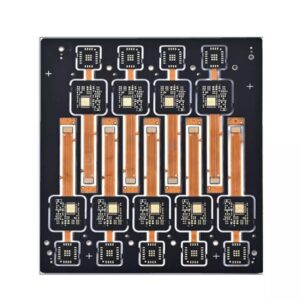
Three-dimensional packaging allows engineers to arrange components across multiple planes instead of placing everything on a single flat board. A rigid-flex PCB supports this approach by connecting rigid component-mounting areas with flexible sections that bend or fold into the required shape.
This design offers several practical advantages:
- Reduced connector use: Flexible sections can replace selected internal cables and connectors between circuit areas.
- More efficient space utilization: Folded circuits fit into compact enclosures and support complex product layouts.
- Simplified assembly: Fewer separate connections can reduce installation steps and wiring complexity.
- Improved connection reliability: Removing unnecessary connection points can reduce potential failure sources.
These benefits make rigid-flex technology useful for products with limited internal space and demanding electrical requirements. However, engineers must still evaluate mechanical stress and bending limits during the design stage.
2. Material Selection and Structural Design
Material selection affects flexibility, thermal performance, signal integrity, and mechanical strength. Baiyoudi supports multiple rigid and flexible materials to meet different product requirements.
| Material or Design Item | Available Options | Key Considerations |
|---|---|---|
| Rigid materials | FR4, High Tg FR4, Rogers, Polyimide | Mechanical strength, heat resistance, and electrical performance |
| Flexible materials | Polyimide, LCP | Bending performance and high-frequency requirements |
| Total board thickness | 0.2–3.2 mm | Installation space and structural requirements |
| Flexible layer thickness | 0.05–0.2 mm | Flexibility and bending requirements |
| Combined layer count | 4–24 layers | Routing density and circuit complexity |
| Copper weight for flexible sections | 0.5–3 oz | Current capacity and routing requirements |
| Copper weight for rigid sections | 1–6 oz | Electrical and mechanical requirements |
| Minimum trace/space, rigid sections | 3/3 mil | Fine-pitch circuit routing |
| Minimum trace/space, flexible sections | 4/4 mil | Flexible circuit routing constraints |
| Surface finishes | ENIG, ENEPIG, Immersion Silver, OSP | Solderability and surface protection |
A polyimide flex circuit is a common choice for designs that require bending or folding. For high-frequency applications, LCP may offer suitable electrical characteristics. A high Tg fr4 rigid board can also support applications that require greater thermal resistance.
Engineers should consider operating temperature, signal frequency, bending radius, and component placement before finalizing the stackup. These factors help balance flexibility, electrical performance, and long-term reliability.
3. How Rigid-Flex Designs Reduce Connector Dependence
Traditional electronic assemblies often connect separate rigid boards through wires, ribbon cables, or board-to-board connectors. Although this approach works for many products, it can increase assembly complexity and consume space in compact enclosures.
A rigid flex printed circuit board integrates rigid and flexible sections into one circuit structure. This approach allows engineers to replace selected internal connections with integrated flexible routing.
The main differences include:
- Connection structure: Flexible sections can replace selected cable connections between rigid areas.
- Space requirements: Folded circuits can follow the shape of the enclosure and reduce the need for separate connectors.
- Assembly workflow: Fewer individual connection parts may simplify installation and inspection.
- Design flexibility: Engineers can place rigid areas where components need support and route flexible sections through narrow spaces.
Connector elimination depends on the product architecture. External ports, replaceable modules, and serviceable components may still require connectors. Engineers should therefore assess each connection individually rather than assume every connector can be removed.
4. Multilayer Design and Manufacturing Considerations
A multilayer PCB supports dense routing and complex electrical functions within a limited footprint. In rigid-flex assemblies, layer transitions and bending areas require careful planning to prevent unnecessary mechanical stress.
When developing a rigid-flex printed circuit board, engineers should focus on several important design considerations:
- Stackup planning: Select rigid and flexible materials according to the electrical and mechanical requirements.
- Bend-area design: Keep sensitive components and unsuitable structures away from areas that must flex.
- Signal integrity: Review routing, impedance requirements, and transitions between rigid and flexible sections.
- Thermal management: Evaluate heat generation and material performance under expected operating conditions.
- Manufacturing review: Check design rules and fabrication requirements before production begins.
Compared with a conventional flexible circuit board used as a separate interconnect, rigid-flex construction combines flexible routing with stable areas for mounting components. This integrated structure can simplify the assembly, although the final design must still meet fabrication and reliability requirements.
Baiyoudi supports design-for-manufacturing (DFM) reviews, signal integrity analysis, and thermal modeling. These services help identify potential issues before production and support a smoother transition from design to manufacturing.

5. Applications Across Different Industries
Rigid-flex technology serves products that need compact packaging, reliable connections, or unconventional internal layouts.
- Medical devices: Portable diagnostic equipment and monitoring products can benefit from space-efficient circuit assemblies.
- Automotive electronics: Control modules and vehicle electronics can use integrated circuits to reduce internal wiring.
- Aerospace and defense: Space-constrained electronic systems can benefit from fewer internal interconnections.
- Consumer electronics: Wearable devices and compact electronic products can use folded circuits to fit smaller enclosures.
Each application has different electrical, mechanical, and environmental requirements. Engineers should confirm operating conditions, expected service life, and available installation space before choosing materials and layer configurations.
6. Develop Your Rigid-Flex PCB Design with Baiyoudi
A rigid-flex printed circuit board helps engineers integrate rigid component areas and flexible routing into a compact assembly. By replacing selected internal cables and connectors, this technology can reduce assembly complexity and make better use of limited space. Baiyoudi supports rigid-flex PCB development through material selection, stackup design, DFM reviews, signal integrity analysis, and thermal modeling. With appropriate engineering and manufacturing controls, rigid-flex designs can support the packaging and reliability requirements of modern electronic products.