


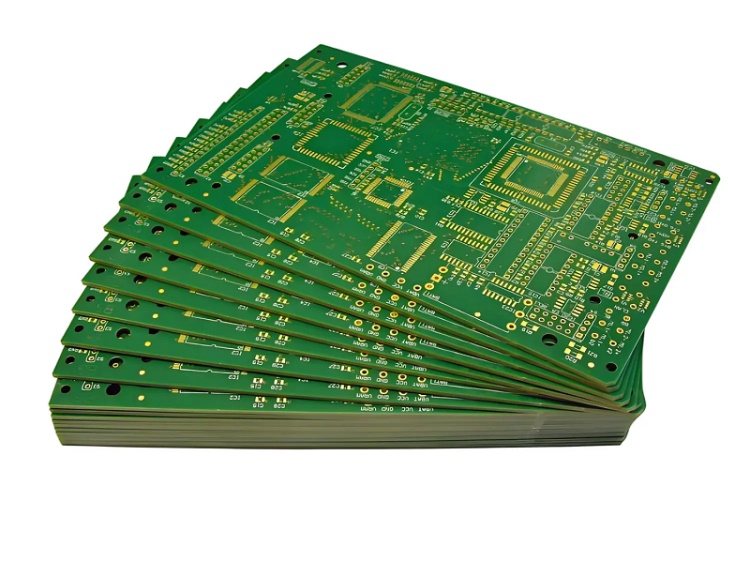
In today’s advanced electronic systems, high-speed signal transmission has become a critical factor affecting device performance and reliability. As electronic products become smaller and more powerful, circuit designs require higher density, faster data transmission, and stronger resistance against signal interference. Therefore, traditional PCB structures may not always meet the requirements of modern high-frequency applications.
An impedance-controlled multilayer PCB provides an effective solution for maintaining signal integrity in complex electronic systems. By precisely controlling the impedance values of transmission lines, multilayer PCB structures help reduce signal distortion, reflection, and electromagnetic interference. Baiyoudi provides professional multilayer PCB manufacturing services, supporting customers with reliable circuit solutions from prototype development to mass production.
The Importance of Impedance Control in High-Speed PCB Design
High-speed electronic devices rely on stable signal transmission to achieve accurate and efficient operation. When signals travel through PCB traces, any impedance mismatch can cause signal reflection, delay, and power loss. As a result, maintaining consistent impedance becomes essential for applications such as communication equipment, medical systems, aerospace electronics, and high-performance computing devices. Multilayer PCBs solve many design challenges by integrating multiple conductive layers separated by dielectric materials. This structure allows engineers to create optimized signal paths while reducing board size and improving electrical performance.
Furthermore, impedance control ensures that signals can travel through the PCB with minimal disruption. By adjusting factors such as trace width, copper thickness, dielectric material properties, and layer spacing, manufacturers can achieve stable electrical characteristics for demanding applications.
How TDR Testing Verifies Signal Integrity
Time Domain Reflectometry (TDR) testing is an important method used to measure impedance performance in high-speed PCB manufacturing. The technology works by sending a test signal through the PCB trace and analyzing reflected signals caused by impedance changes. Therefore, TDR testing allows manufacturers to identify potential signal integrity issues before products enter final production. It helps verify whether the actual impedance matches the design specifications and ensures that transmission lines perform as expected.
For an impedance-controlled multilayer PCB, TDR testing provides valuable quality control throughout the manufacturing process. It helps detect problems such as inconsistent trace dimensions, material variations, or layer alignment issues that may affect high-speed performance.
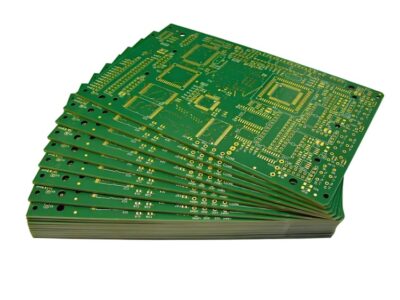
Advanced Multilayer PCB Structure for Complex Electronics
Modern electronic systems often require more circuits within limited space. Multilayer PCB technology addresses this challenge by combining multiple copper layers into a compact structure. Typically, multilayer boards can include 4 to 50 conductive layers, providing high-density interconnection capabilities. Moreover, advanced layer stacking and via structures allow designers to optimize signal routing while maintaining reliable electrical performance. This makes multilayer PCBs widely used in industries requiring compact and powerful electronic solutions.
| Feature | Benefits |
|---|---|
| Multiple Layer Structure | Supports complex circuit integration and space optimization |
| Controlled Impedance Design | Improves high-speed signal transmission stability |
| TDR Testing | Verifies impedance accuracy and signal integrity |
| Advanced Via Technology | Enables flexible and reliable circuit routing |
| High-Performance Materials | Supports demanding operating environments |
Material Selection Affects PCB Performance
Besides structural design, material properties also influence multilayer PCB performance. Dielectric constant (Dk), dissipation factor (Df), and glass transition temperature (Tg) are important factors when selecting PCB materials. Baiyoudi multilayer PCBs support dielectric constant values from 3.5 to 4.8 and dissipation factors from 0.001 to 0.02, providing stable electrical characteristics for various applications. Additionally, the available Tg range from 140°C to 220°C allows the boards to meet different thermal performance requirements.
Furthermore, copper weight from 0.5 oz to 6 oz and board thickness options from 0.4mm to 7.0mm provide flexible solutions for different electronic designs. These specifications enable engineers to develop reliable products with optimized electrical and mechanical performance.
From Prototype Development to Mass Production
Successful PCB projects require not only advanced manufacturing technology but also consistent quality control throughout every stage. Therefore, choosing an experienced PCB manufacturer is important for achieving reliable results. Baiyoudi supports customers from initial prototype development to volume production, providing multilayer PCB solutions designed for high-performance electronic systems. Through precise layer stacking, advanced processing technology, and strict testing procedures, the company helps customers improve product reliability and shorten development cycles.
An impedance-controlled multilayer PCB offers the foundation needed for next-generation electronics by combining signal integrity, compact design, and manufacturing precision. With professional testing methods such as TDR analysis, manufacturers can ensure that PCB performance meets the requirements of high-speed applications.
Applications of High-Speed Multilayer PCB Technology
Multilayer PCBs are widely used in industries where reliability and signal performance are essential. For example, telecommunications equipment requires stable high-frequency transmission, while aerospace systems demand durable circuit performance under challenging conditions. Additionally, medical devices, industrial automation equipment, and advanced computing platforms rely on multilayer PCB technology to support complex electronic functions. The combination of high-density design and controlled electrical performance makes these boards a key component in modern electronic innovation.
Conclusion
In conclusion, high-speed electronic systems require PCB solutions that can provide stable signal transmission and reliable performance. An impedance-controlled multilayer PCB achieves this goal through precise impedance management, advanced multilayer structures, and strict TDR testing. By combining high-quality materials, accurate manufacturing processes, and professional testing capabilities, Baiyoudi delivers multilayer PCB solutions that support advanced electronic applications. From prototype designs to large-scale production, reliable PCB technology helps businesses create more efficient and powerful electronic products.