


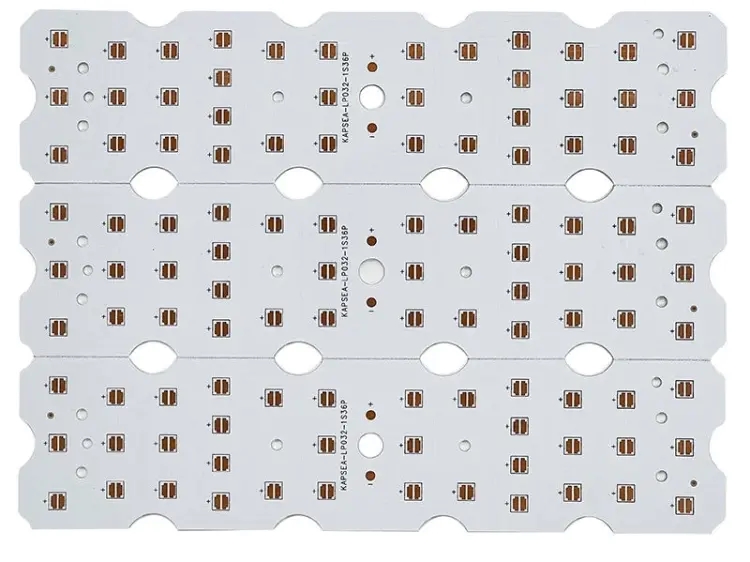
With the continuous development of LED lighting technology, higher brightness, longer service life, and improved energy efficiency have become essential requirements for modern lighting products. However, high-power LEDs generate significant heat during operation, and inefficient heat control can affect performance, stability, and product lifespan. The LED thermal management PCB provides an effective solution by combining excellent heat dissipation capability with reliable circuit performance. Unlike traditional FR-4 PCBs, this metal-based PCB uses an aluminum substrate structure to transfer heat away from critical components more efficiently. As a result, it helps maintain stable operating temperatures and improves the overall reliability of LED lighting systems.
Baiyoudi focuses on developing advanced PCB solutions that support modern electronic applications. Through optimized thermal design and durable materials, aluminum-based PCB technology helps manufacturers create more efficient and reliable LED products.
Aluminum Substrate Design Improves Heat Dissipation
One of the most important factors affecting LED performance is thermal management. When LEDs operate at high power levels, excessive heat accumulation may lead to reduced brightness, color changes, or shorter component lifespan. The aluminum substrate structure of this PCB provides excellent thermal conductivity, allowing heat to move quickly away from heat-generating components. With a 1.5mm thickness and 3.0W/mK dielectric layer, this PCB offers efficient thermal transfer for demanding lighting applications. Furthermore, compared with conventional FR-4 boards, aluminum-based PCBs can reduce operating temperatures by approximately 30-50%, helping LED systems achieve better stability during long-term operation.
Key Advantages Of Aluminum-Based LED PCB Technology
The LED thermal management PCB is designed to meet the needs of high-power LED applications where heat control and durability are critical.
Main Product Advantages:
- Efficient Heat Dissipation: Quickly transfers heat away from LED components to maintain stable performance.
- High Mechanical Strength: Provides improved durability and vibration resistance compared with traditional PCB materials.
- Lightweight Thermal Solution: Reduces overall system weight compared with conventional heat sink designs.
- Excellent Thermal Cycling Performance: Supports up to 1000 thermal cycles for long-term reliability.
- Safety Compliance: Meets UL94 V-0 flame retardant requirements for enhanced product safety.
These advantages make aluminum PCB technology suitable for various applications, including LED lighting, automotive electronics, power conversion systems, and industrial equipment.
Supporting Stable LED Performance And Longer Lifespan
Heat management directly influences the efficiency and durability of LED products. Therefore, choosing the right PCB structure is important for manufacturers who need consistent lighting performance. The LED thermal management PCB helps reduce thermal stress by creating a direct heat conduction path. Consequently, LEDs can maintain more stable brightness output and operate more efficiently over extended periods. In addition, the aluminum substrate improves mechanical stability, making it suitable for environments where vibration, temperature changes, or continuous operation are common. This makes the PCB an ideal choice for industrial lighting, outdoor lighting, and automotive LED systems.
Application Analysis Of Aluminum-Based PCB
Different industries require different levels of thermal performance. The following applications demonstrate how aluminum PCB technology supports various LED and electronic systems.
- High-Power LED Lighting: Provides efficient cooling for high-intensity lighting modules.
- Automotive LED Systems: Improves reliability under temperature fluctuations and vibration conditions.
- Industrial Equipment: Supports continuous operation with enhanced thermal durability.
- Power Conversion Devices: Helps manage heat generated by high-power electronic components.
| Application Area | Thermal Management Benefits |
|---|---|
| LED Lighting Fixtures | Maintains brightness stability and extends LED lifespan |
| Automotive Lighting | Improves durability under heat and vibration conditions |
| Industrial Electronics | Supports reliable operation in demanding environments |
| Power Conversion Systems | Enhances heat transfer efficiency for high-power components |
As shown in the table, aluminum-based PCB technology provides flexible thermal solutions for different electronic applications.
Reliable Structure For Modern Electronic Manufacturing
Besides thermal performance, PCB reliability is also important for product development. Aluminum-based PCBs offer stronger mechanical stability and better resistance to environmental stress compared with standard circuit boards. Moreover, the lightweight structure allows manufacturers to reduce dependence on additional cooling components. This not only simplifies product design but also improves installation efficiency. With advanced manufacturing technology, Baiyoudi provides PCB solutions that balance thermal performance, safety, and mechanical reliability for various industries.
Improving Future LED Design Through Better Thermal Control
As LED products continue to become brighter and more compact, effective thermal management will remain a key factor in product success. Poor heat control can limit performance, while optimized PCB structures can significantly improve efficiency and reliability. The LED thermal management PCB combines aluminum substrate technology, excellent heat transfer capability, and durable construction to support next-generation lighting applications. From commercial lighting to industrial systems, it provides a dependable foundation for stable and long-lasting LED performance. By choosing advanced thermal PCB solutions, manufacturers can develop lighting products that deliver better efficiency, improved reliability, and enhanced user experiences.