


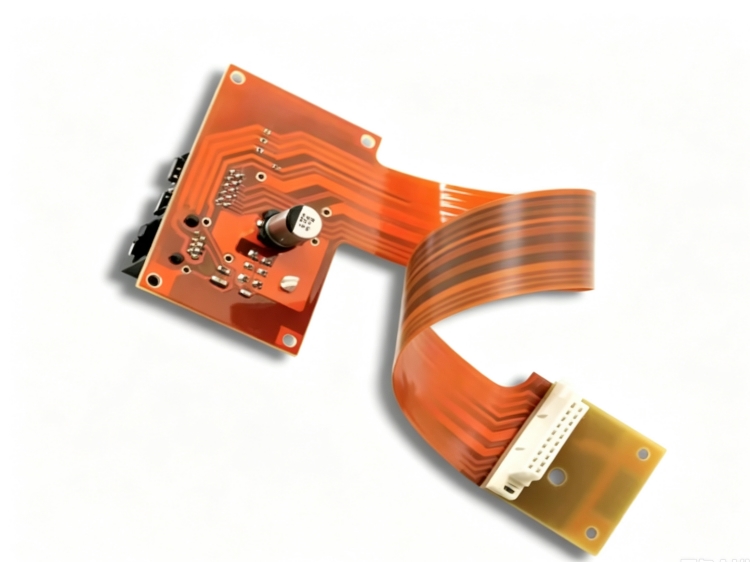
As electronic devices continue to become smaller, lighter, and more flexible, PCB designs need to withstand increasingly complex mechanical requirements. Traditional rigid circuit boards may not be suitable for applications that involve repeated bending, movement, or limited installation space. Therefore, rigid-flex PCB technology has become an important solution for industries requiring both structural stability and flexible performance. The dynamic flex reliability rigid-flex PCB combines rigid board strength with flexible circuit advantages, helping engineers prevent cracking issues and improve product reliability in high-flex applications.
Understanding the Challenges of High-Flex PCB Applications
High-flex applications place continuous mechanical stress on circuit boards. During repeated bending cycles, the flexible areas of a PCB may experience tension, compression, and stress concentration, which can eventually lead to cracks or electrical failures. Consequently, controlling material selection, layer transitions, and manufacturing precision becomes essential for achieving long-term reliability.
Unlike standard PCB designs, rigid-flex PCBs integrate rigid sections and flexible polyimide layers into one structure. This combination allows electronic components to be mounted securely while enabling the circuit to adapt to dynamic movements. Moreover, proper engineering design can reduce stress accumulation in transition areas and improve the overall durability of the assembly.
Advanced Engineering for Crack Prevention
Preventing cracking in rigid-flex PCBs requires careful control throughout the manufacturing process. Layer alignment, via design, copper thickness, and material selection all influence the final performance of the circuit. For this reason, professional manufacturers need advanced production technology and strict quality control procedures.
Baiyoudi has more than 13 years of experience in rigid-flex PCB manufacturing, focusing on solving complex design challenges through precise engineering and process optimization. The company applies advanced manufacturing methods to improve mechanical stability and ensure reliable performance in demanding applications. The dynamic flex reliability rigid-flex PCB is designed with proven bending performance, supporting more than 200,000 bend cycles under IPC-6013D Class 3 standards. Furthermore, optimized transition structures help reduce stress concentration, minimizing the risk of cracking during repeated movement.
Key Technologies Improving Rigid-Flex Reliability
Several technical factors determine whether a rigid-flex PCB can perform reliably in high-flex environments. Advanced material selection and precision manufacturing processes are essential for achieving stable electrical and mechanical performance.
| Technology Factor | Purpose | Reliability Benefit |
|---|---|---|
| Polyimide Flexible Substrate | Provides bending capability | Improves flexibility and mechanical durability |
| Optimized Layer Transition | Reduces stress concentration | Helps prevent cracking in transition areas |
| Precision Micro-Flex Manufacturing | Supports fine circuit structures | Maintains stable electrical performance |
| Controlled Via Design | Improves connection reliability | Reduces risk of mechanical failure |
These technologies work together to create a more durable circuit structure. Additionally, accurate manufacturing control ensures that flexible sections maintain their performance even after repeated bending and movement.
Improving Performance Through Precision Manufacturing
Manufacturing accuracy plays a critical role in rigid-flex PCB reliability. Small defects in flexible areas or transition zones can become potential failure points during long-term operation. Therefore, maintaining strict process standards is necessary to achieve consistent product quality. Baiyoudi focuses on high-precision rigid-flex PCB assembly solutions, including micro-flex processing with 50μm line and spacing capability on polyimide substrates. This level of precision supports compact electronic designs while maintaining reliable signal transmission and mechanical stability.
Moreover, the company emphasizes Z-axis stability during production. With controlled transition zone performance and less than 0.1% via cracking rate, the PCB structure can better withstand demanding application environments. As a result, manufacturers can develop electronic products with longer service life and improved reliability.
Applications Requiring Dynamic Flex Reliability
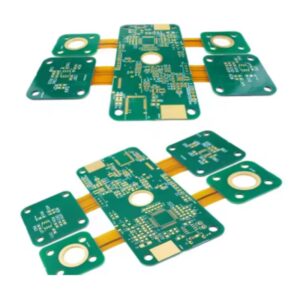
Rigid-flex PCB technology is widely used in industries where space limitations and repeated movement are common. For example, medical devices, wearable electronics, aerospace equipment, industrial systems, and advanced consumer products often require flexible circuit solutions that can maintain performance under mechanical stress.
The dynamic flex reliability rigid-flex PCB provides advantages for applications that require compact designs and continuous bending capability. Furthermore, its integrated rigid and flexible structure reduces the need for multiple connectors, which can simplify assembly and improve system reliability. As electronic products continue to evolve, the demand for flexible and durable PCB solutions will continue to increase. Therefore, selecting a manufacturer with strong engineering capabilities is important for achieving stable performance in complex applications.
Reliable Rigid-Flex PCB Solutions from Baiyoudi
High-flex electronic applications require more than just flexible materials; they need precise design, advanced manufacturing, and strict quality control. A reliable rigid-flex PCB solution helps prevent cracking, improve mechanical endurance, and maintain consistent electrical performance throughout the product lifecycle.
Baiyoudi provides professional rigid-flex PCB assembly solutions with extensive manufacturing experience and advanced engineering capabilities. By combining precision production, dynamic bending reliability, and optimized structural design, the dynamic flex reliability rigid-flex PCB offers a dependable solution for industries requiring high-performance flexible electronics. With continuous innovation and strict manufacturing standards, Baiyoudi helps customers overcome complex PCB challenges and create more reliable electronic products for future applications.