


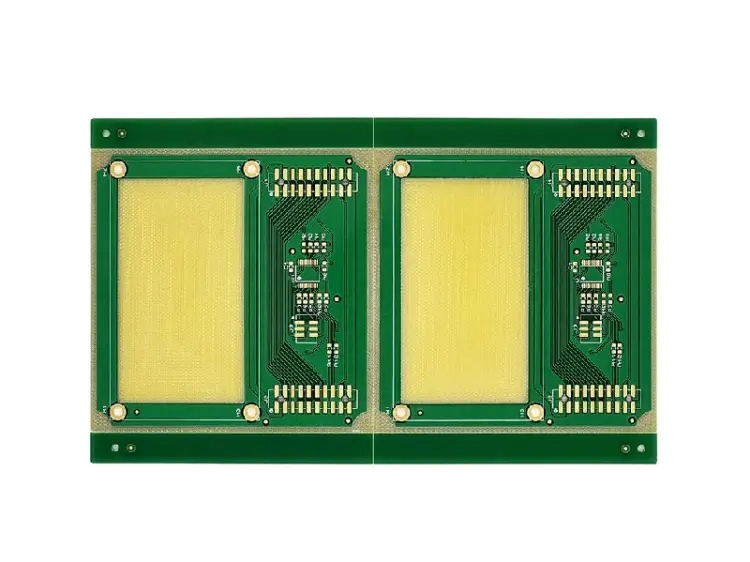
High-frequency electronic systems require more than accurate circuit layouts and reliable fabrication. As signal frequencies increase, the properties of the PCB material can directly influence signal integrity, transmission loss, and overall circuit stability. Therefore, selecting the right laminate is an essential step when developing RF, microwave, and high-speed electronic applications.
A reliable high frequency pcb manufacturer should consider dielectric performance, thermal stability, signal loss, and material compatibility throughout the PCB fabrication process. Unlike conventional FR-4 materials, high-frequency laminates are specifically engineered for demanding RF and microwave applications, where even small changes in electrical properties can affect system performance.
Rogers PCB Materials for RF Applications
Rogers PCB materials are widely recognized for their electrical performance in high-frequency applications. These laminates provide controlled dielectric properties that help engineers manage signal transmission more effectively. Moreover, Rogers materials can offer dielectric constants ranging from 2.2 to 10.2, depending on the selected material. This broad range allows designers to choose a suitable substrate according to circuit frequency, impedance requirements, and application conditions.
In addition, certain Rogers laminates can achieve dielectric loss values as low as 0.001. As a result, they can help reduce signal attenuation and support more consistent performance in RF and microwave circuits.
How Low Dielectric Loss Improves Signal Integrity
Signal loss becomes increasingly important as operating frequencies rise. When a signal travels through a PCB, part of its energy can be lost within the dielectric material. Therefore, a material with low dielectric loss can help minimize attenuation during transmission. This is particularly important for RF communication, microwave circuits, and high-speed digital systems. Furthermore, lower signal loss can contribute to more consistent transmission performance over longer electrical paths.
A suitable high-frequency laminate can therefore provide an important foundation for maintaining signal quality. However, material selection should always consider the complete PCB design, including trace geometry, layer structure, operating frequency, and impedance requirements.
Stable Dielectric Constant for Consistent Performance
The dielectric constant, or Dk, affects how electrical signals propagate through a PCB. If the Dk varies significantly, the resulting changes can influence impedance and signal timing. For this reason, stable dielectric properties are particularly valuable in high-frequency designs. Rogers laminates are engineered to provide controlled Dk characteristics, helping designers achieve more predictable electrical behavior.
Consequently, selecting an appropriate laminate can make it easier to maintain signal integrity across different operating conditions. This is one reason material selection remains a key consideration when developing RF and microwave PCBs.
Key Material Selection Factors
When evaluating high-frequency PCB materials, several characteristics should be considered together:
- Dielectric constant: Determines important signal propagation characteristics and supports impedance design.
- Dielectric loss: Lower loss can help reduce signal attenuation at higher frequencies.
- Material stability: Consistent electrical properties support predictable circuit performance.
- Application requirements: RF, microwave, aerospace, automotive radar, and wireless systems may require different laminate specifications.
- Fabrication compatibility: The material should match the PCB manufacturing process and required layer structure.
Therefore, choosing a laminate based on only one specification may not provide the best overall result.
Material Comparison for High-Frequency Applications
| Material Factor | High-Frequency Rogers PCB | Conventional FR-4 |
|---|---|---|
| Dielectric Performance | Engineered for RF and microwave use | General-purpose PCB applications |
| Dielectric Loss | Can reach very low values | Generally higher at high frequencies |
| Dk Range | Approximately 2.2–10.2 depending on material | Varies by material grade |
| Signal Integrity | Designed for demanding high-frequency circuits | More suitable for standard-speed applications |
| Typical Applications | RF, microwave, radar, aerospace, wireless | General electronics and digital circuits |
This comparison shows why specialized laminates can be advantageous when signal frequency and transmission performance become critical.
Rogers PCBs for Demanding Applications
Rogers PCB materials can support a broad range of advanced electronic applications. For example, wireless communication systems require controlled electrical performance to maintain reliable signal transmission. Similarly, automotive radar systems operate at high frequencies where material properties can strongly influence circuit behavior.
Furthermore, aerospace, defense, and satellite electronics often require stable performance under demanding operating conditions. High-frequency laminates can therefore provide a suitable foundation for specialized circuit designs. High-speed digital systems can also benefit from controlled dielectric characteristics. As signal speeds continue to increase, managing transmission loss and impedance becomes increasingly important.
Process Control Matters Alongside Material Choice
Material selection is only one part of high-frequency PCB fabrication. Even a high-performance laminate requires accurate processing to achieve the intended electrical characteristics. A capable high frequency pcb manufacturer should maintain tight process controls throughout fabrication. This includes controlling layer alignment, trace dimensions, drilling, surface finishing, and other manufacturing parameters. Moreover, engineering experience is important when working with specialized materials. Different laminates can require different processing approaches, so fabrication teams should understand the characteristics of each material before production begins.
Supporting Prototyping and Mass Production
High-frequency PCB projects can begin with prototypes before moving into larger production volumes. Therefore, a flexible fabrication capability can help maintain consistency as a design progresses from initial samples to mass production. With appropriate equipment, engineering support, and process controls, manufacturers can produce high-frequency boards for both development and larger-scale requirements. Consequently, customers can evaluate circuit performance before committing to broader production. This approach can also help identify material or design issues at an earlier stage, reducing the risk of unexpected performance problems during later production.
Why Choose Baiyoudi?
Baiyoudi focuses on high-frequency PCB fabrication for demanding electronic applications. Its capabilities include Rogers PCB fabrication, material compatibility, and controlled manufacturing processes designed to support reliable and repeatable results.
Furthermore, experienced engineering teams can help evaluate material requirements according to the intended application. This is especially useful for RF, microwave, wireless communication, radar, and other high-frequency circuit designs. By combining suitable materials with controlled fabrication, Baiyoudi can provide PCB solutions that address both electrical performance and manufacturing requirements.
Building Better RF Performance Through Material Selection
The performance of a high-frequency PCB depends on many interconnected factors. However, the laminate provides the foundation for electrical behavior, making material selection one of the earliest and most important design decisions. A high frequency pcb manufacturer with Rogers PCB fabrication capabilities can help customers select materials according to frequency, dielectric requirements, signal integrity, and application conditions. In addition, careful process control helps ensure that the selected material performs consistently throughout fabrication. Ultimately, choosing the right high-frequency laminate can help reduce signal loss, maintain stable dielectric characteristics, and support reliable RF performance. As electronic systems continue to demand higher frequencies and faster signal transmission, specialized PCB materials will remain an important part of successful circuit design.