


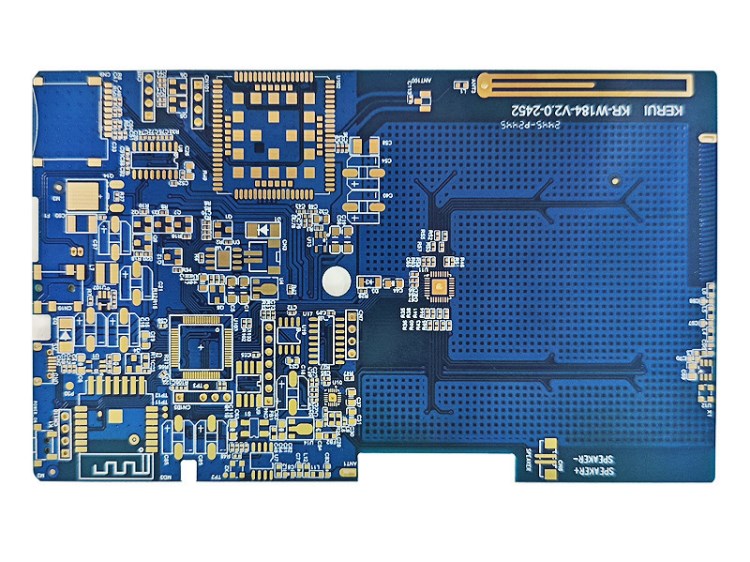
In modern electronics manufacturing, soldering accuracy directly determines product reliability, signal integrity, and long-term performance. In precision BGA assembly services, even a microscopic soldering deviation can create hidden defects such as voids, bridging, or misalignment. At Baiyoudi, engineers apply advanced SMT-based processes to ensure ultra-high precision. The production line supports fine-pitch designs down to 0.15 mm QFP and 0.2 mm BGA. Moreover, placement accuracy stays below ±30µm, which significantly reduces initial soldering risks in complex PCB structures.
High-Precision SMT Placement Reduces Initial Errors
One of the most important steps in controlling soldering errors is precise component placement. In precision BGA assembly services, SMT machines position every component with micron-level accuracy before reflow begins. First, high-speed pick-and-place systems align components using optical recognition technology. Then, real-time vision systems verify ball positioning against PCB pads to avoid misalignment. As a result, engineers eliminate most placement-related soldering errors at the earliest stage. Furthermore, Baiyoudi operates high-speed production systems reaching 60,000 CPH, which maintains both speed and accuracy across large-volume manufacturing.
Nitrogen Reflow Soldering Improves Joint Quality
Another critical method in precision BGA assembly services is nitrogen-assisted reflow soldering. This process improves solder joint formation by controlling oxidation during heating. First, engineers introduce nitrogen into the reflow environment to reduce oxygen levels. Then, solder balls melt more evenly and form smoother joints. In addition, surface tension becomes more stable, which helps prevent voids and weak connections. As a result, Baiyoudi achieves void rates below 20%, which improves structural strength and long-term reliability in high-density PCB designs.
Thermal Profile Optimization Ensures Stable Soldering
Temperature control plays a major role in reducing soldering defects. In precision BGA assembly services, engineers carefully design thermal profiles to stabilize every soldering stage. First, preheat zones gradually raise the board temperature to avoid thermal shock. Then, reflow zones deliver controlled peak heat to fully melt solder joints. Finally, cooling zones reduce stress by lowering temperature at a controlled rate. Therefore, stable thermal management reduces issues such as cold joints, solder bridging, and uneven wetting across BGA packages.
Multi-Stage Inspection Eliminates Hidden Defects
Even with precise manufacturing, engineers still rely on inspection systems to ensure zero-defect output in precision BGA assembly services. First, AOI systems scan every board surface to detect alignment and visible solder issues. Then, X-ray inspection reveals hidden defects such as voids, cracks, or incomplete solder joints under BGA components. Finally, functional testing verifies full electrical performance. In addition, Baiyoudi applies multi-stage inspection protocols to ensure every unit meets strict reliability standards before shipment.
Material Engineering and Fine-Pitch Capability
Another important factor in soldering control involves material compatibility. Precision BGA assembly services at Baiyoudi support POP, CGA, QFN, LGA, and micro-BGA packages as small as 0.25 mm², including 0201 components. First, engineers select solder materials with stable melting characteristics. Then, stencil design controls solder paste volume with high precision. Finally, pad layout optimization improves solder ball positioning accuracy and reduces bridging risk. As a result, the process minimizes defects caused by material inconsistency in high-density assemblies.
Performance Benefits in Final Applications
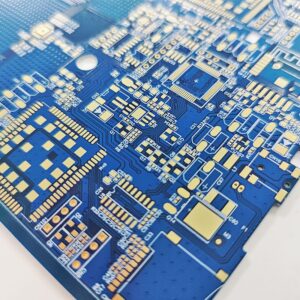
Controlled soldering directly improves final device performance. In precision BGA assembly services, stable solder joints enhance signal integrity and improve heat dissipation efficiency. Moreover, Baiyoudi’s optimized process helps high-frequency circuits maintain stable electrical behavior under complex operating conditions. Therefore, final products achieve stronger reliability in demanding applications such as communication, automotive, and industrial electronics.
Conclusion: Achieving Reliable Zero-Defect Manufacturing
In summary, engineers at Baiyoudi control soldering errors in precision BGA assembly services through high-accuracy SMT placement, nitrogen reflow soldering, optimized thermal profiling, multi-stage inspection, and advanced material engineering. By combining ±30µm placement precision with 60,000 CPH high-speed manufacturing, the production system consistently reduces defects and improves reliability. Therefore, Baiyoudi delivers stable, high-performance BGA assemblies for critical electronic applications.