


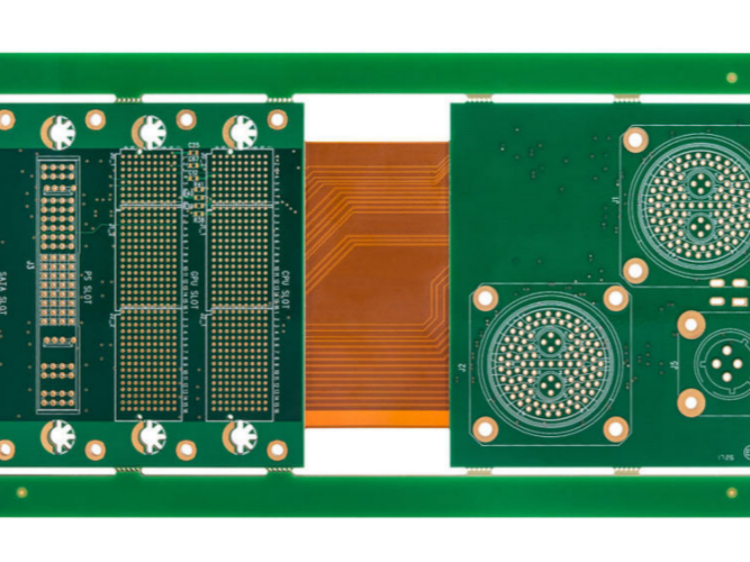
In advanced electronic systems, product reliability depends heavily on how well internal layers are integrated during manufacturing. In particular, rigid flex lamination technology plays a decisive role in combining rigid FR4 structures with flexible polyimide circuits into a single compact system. Moreover, this integration removes the need for connectors and cables, which significantly improves mechanical stability and electrical reliability. Baiyoudi, as a professional rigid-flex PCB manufacturer, continuously optimizes this process to support complex electronic applications that require both durability and precision.
Structural Integration and Design Optimization
First of all, rigid-flex PCB structures require precise coordination between material selection, layer stacking, and thermal control. When engineers apply rigid flex lamination technology correctly, they achieve seamless bonding between rigid and flexible regions without introducing stress concentration points. Furthermore, Baiyoudi engineering teams work closely with customers to improve manufacturability through DFM reviews, signal integrity analysis, and thermal simulation. As a result, designers can validate performance before production and reduce potential failure risks.
Mechanical Reliability in Dynamic Environments
In addition, high-reliability electronics often operate under vibration, bending, or continuous mechanical stress. Therefore, lamination quality directly influences long-term durability. The rigid flex lamination technology ensures that flexible layers maintain elasticity while rigid sections preserve structural support. Moreover, this balance allows the final product to withstand repeated mechanical movement without cracking or delamination. Consequently, industries such as aerospace, medical electronics, and industrial automation benefit from improved operational stability.
Thermal Stability and Material Compatibility
Furthermore, thermal performance plays a critical role in multilayer PCB systems. During operation, temperature fluctuations can cause expansion differences between materials. However, when engineers properly control rigid flex lamination technology, they minimize internal stress caused by thermal mismatch. In addition, Baiyoudi uses optimized combinations of polyimide flexible layers and FR4 rigid materials to ensure stable performance under harsh environmental conditions such as high humidity or continuous heat exposure.
Electrical Performance and Signal Integrity
Moreover, eliminating connectors between rigid and flexible sections significantly improves signal integrity. Traditional PCB assemblies often suffer from signal loss or impedance mismatch at connection points. In contrast, rigid-flex structures built with advanced lamination techniques maintain continuous electrical paths. Therefore, rigid flex lamination technology enhances high-speed signal transmission and reduces noise interference, which is essential for modern electronic devices with increasing data demands.
Engineering Support and Manufacturing Capability
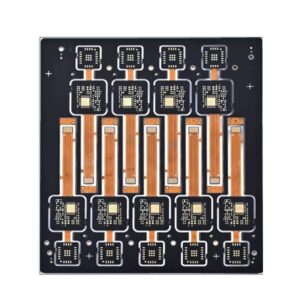
In addition, Baiyoudi provides full engineering support throughout the product development cycle. The company offers DFM analysis, thermal modeling, and signal integrity evaluation to ensure that each design meets performance expectations. Furthermore, engineers optimize stack-up structures to improve production yield and reduce manufacturing risk. Through these methods, Baiyoudi delivers reliable rigid-flex PCB solutions for both cost-sensitive applications and high-end mission-critical systems.
Conclusion: Enabling Next-Generation Electronic Design
In conclusion, modern electronics require compact structures, high durability, and stable electrical performance. Rigid flex lamination technology enables all these requirements by integrating rigid and flexible circuits into a unified structure. Moreover, it reduces assembly complexity while improving long-term reliability in demanding environments. With advanced manufacturing capabilities and strict quality control, Baiyoudi continues to support innovative electronic designs that push the boundaries of performance, reliability, and miniaturization.